Latency vs. Velocity in the age of AI
First published on LinkedIn, August 13, 2026
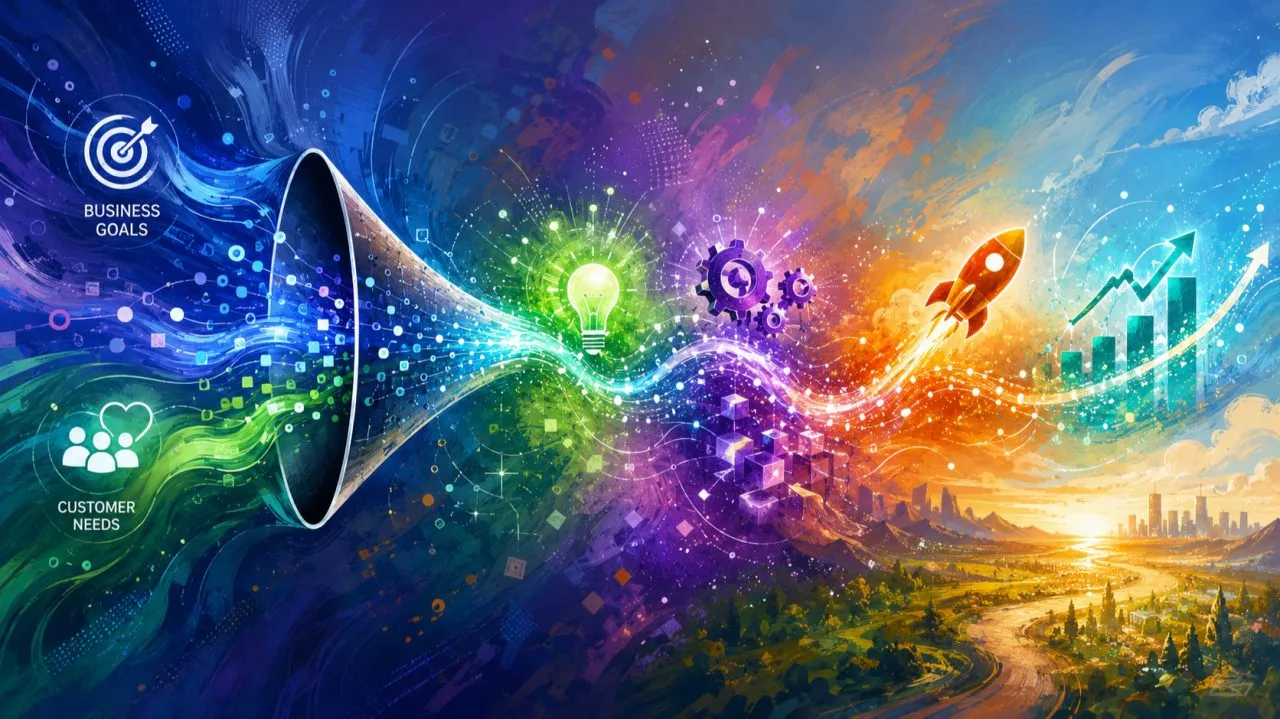
This is about the Speed of Building vs. the Speed of Learning.
A while back, I gave a presentation to our technology leadership team on creating strong understanding of customers and the market. I focused on diversity of inputs: data, governance groups, and general end-user and stakeholder inputs. We had systems for many of these things. It helped build a nice set of context to equip our team for making decisions.
However, we had a different challenge - release cycles and upgrade patterns meant that our time from decision to impact was far too long. Our time to understanding whether what we were doing was actually going to make a difference for our customers and our business was challenging.
We had things in motion to improve our velocity (increasing developer output every sprint) and shorten our impact cycles (more frequent releases with faster/automatic upgrades), in turn reducing that time to impact.
However, our time to understand a problem, design an approach to solving it, and really understand how it’s going to be used was still too long. This is where the idea of latency – decision to understanding of impact comes into play.
Around that same time, I had listened to a great episode of Lenny’s Podcast on identifying bullseye customers and running more effective research exercises (Link: https://www.lennysnewsletter.com/p/finding-your-bullseye-customer-michael-margolis). Mike Margolis talked about a process of running research springs to connect with 5 customers using 3 prototypes in 1 day. I’ve been very inspired by this and was always looking for opportunities to test this out. There’s nothing like working with a real human.
At some point last year, I also started to realize the implications of generative AI in prototyping. I could sit down with v0 and create something functional and interactive and get it in front of someone in minutes instead of days. The cost of ‘working’ software was constrained less by time and effort and more by tokens.
Fast forward a few months and Claude Code unlocked a whole new level of prototyping, allowing for an immense amount of additional context (Github, PRDs, annual goals, etc.) to be incorporated into that process, with models getting progressively more powerful. Progress continued and now Claude Design works as an interactive thinking partner, building multi-variant prototypes that are interactive and testable.
We can learn so much faster today, but the learning pipeline is about more than just building prototypes – it’s about good methodologies, strong understanding of the customers and users who will be using and impacted by your solutions, and ultimately about getting things out in the real world.
Understanding your customers and your business still matters, good strategy and prioritization still matters, design and validation still matters, development speed still matters, and a strong pipeline to production still matters, monitoring and understanding impact still matters. They’re all connected, they all need process, but they should ALL be getting faster, supercharged by agentic tooling applied strategically by the people who both understand what’s required to do it successfully and by what’s possible with AI.
Get out and talk with people, look for opportunities to connect what you’re doing to real problems and real business goals, and seek to understand what’s just now possible with the technology that’s available to us.
Going back to that presentation, I pitched the idea of the Backlog Optimization & Market-Based Evaluation machine - a fully automated** statistical sampling and parsing model for generating a prioritized list of product specifications, designs and business plans based on all inputs, inspired by British cryptologists to decipher German encrypted messages during WW2. Back in my days traveling to Milton Keynes, England I got a chance to go to Bletchley Park and see the machines the codebreakers used during World War II. The enginuity and abstract thinking required to do this was incredible. Now I can just talk to a computer and it can do amazing things. How far we’ve come where what felt like a joke can now realistically transform raw notes and data into working software.
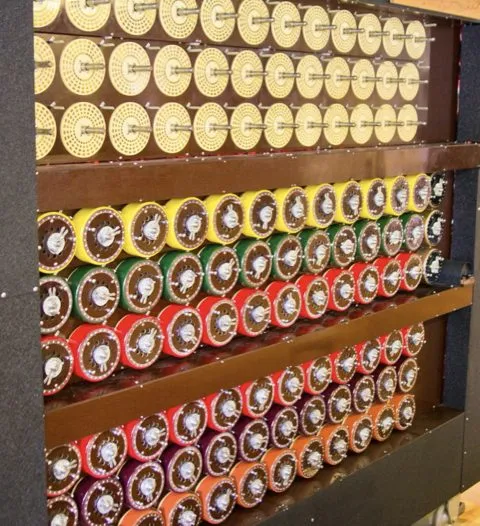
the Bombe machine
But… the reality is that the customer and business context required to choose the right amazing things to focus on comes from ongoing saturation in the customer environment problem space. Stay close to your customers and continue learning how your business operates and the potential to supercharge both of those outcomes rises massively.