The AI-Empowered Glue Layer
First published on LinkedIn, April 29, 2026
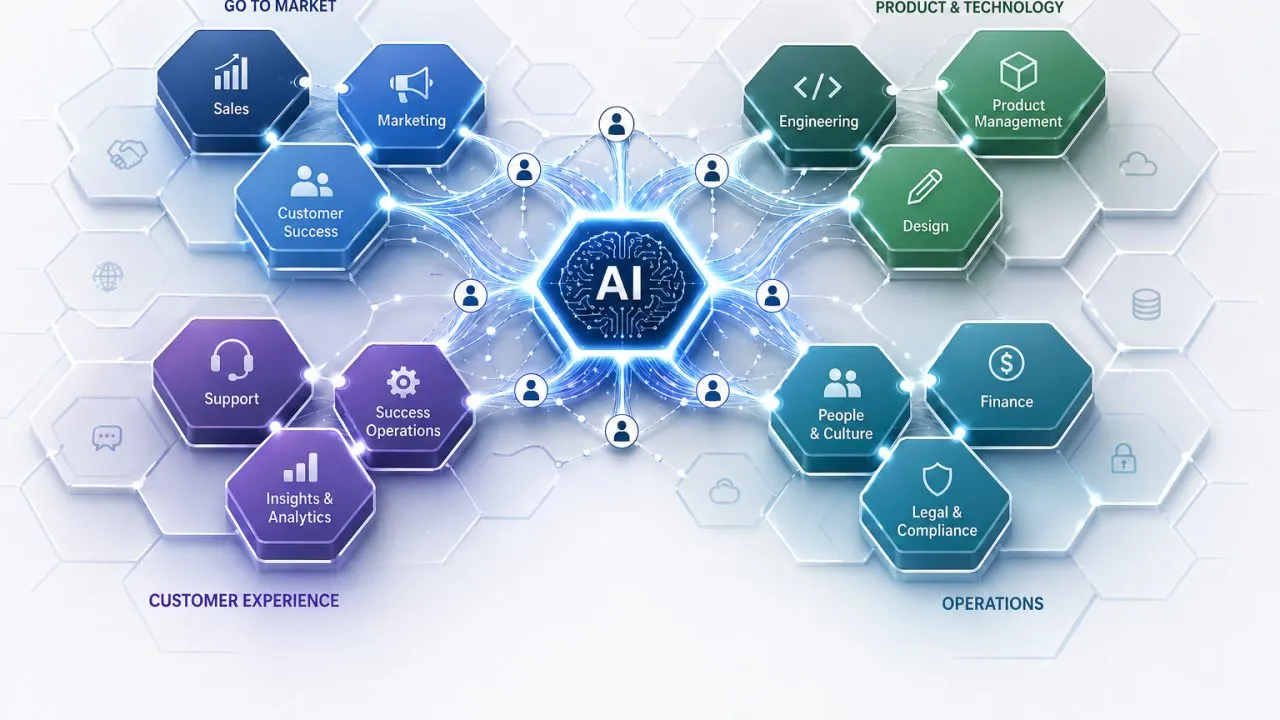
I’ve always been driven to automate and drive operational improvement. When I started my career, the concept of Lean was growing significantly in popularity beyond manufacturing, and I’m grateful my company invested into that training. Some key topics stood out to me – continuous improvement and ongoing elimination of waste, paired with what I’ll call “glue” concepts like buffers and runners. They don’t have a formally defined set of tasks to optimize (which seems like waste), but instead help adjust the shape of operations to maximize overall system flow.
This shaped my perspective around all organizations – pairing a continuous improvement, waste-elimination mentality with a more fluid, abstract “glue” layer. Instead of just maximizing utilization or productivity, looking at the entire system to maximize overall impact and to continuously increase that impact through balanced, organic investments into getting “better”.
In those first years out of college, I was in a role where I dealt with giant spreadsheets with a bunch of part numbers. I needed to turn these items into a pricing model for our sales executives to competitively and profitably bid deals. It took 1-2 weeks to build out the first iteration of these models, with many manual steps along the way. After my curiosity kicked in and I learned SQL and VBA, I started refactoring parts of my role. Before too long, I had automated most of those manual steps and massively cut down my work time on building the models to create more time for the core objectives - competitiveness and profitability. After a 95% time-savings in that aspect of my role, I was getting restless, and started looking for where else I could help. I was starting to find ways to become that glue or that buffer for others.
Over the years, I’ve carried both the mindset that things can get massively better with the creative application of technology and that, given the margin to be creative, organizations can transform their productivity in major ways. As a product manager and product leader, this has compelled me towards not solely looking at feature function attributes, but at operational efficiency and the whole “business” behind a product. This has driven me to seek a much deeper understanding of core needs and jobs to be done as well as the backing quantitative data around this, often leading to improved, more straightforward solutions and elimination of waste in the form of unnecessary configuration or excessive features. I certainly haven’t always gotten that perfect, but I am proud of the work I’ve done.
The best product managers have that same “glue” mindset. Rather than being a solely commercial, operational, or financial role, product management has the responsibility to balance sustainability and growth in all of those areas. It requires that product managers have the margin to act as the buffer to enable organizational success, and to connect many different competing concepts (similar to those lean concepts described earlier).
However, most product managers are stretched incredibly thin. Between the continuous discussions, presentations, emails, messages, research, design, build and launch activities, there sometimes doesn’t feel like there is enough time to think. But thinking is an essential part of the job, and without the strategic thinking, clarity suffers, alignment suffers, and impact suffers. Those product managers likely don’t have the space to really dive into the ambiguity of what balanced or better looks like. I’ve been there before and it’s no fun.
Towards the end of 2025, I had the opportunity to slow down a bit, which gave me the margin to really dig into new ways of leveraging AI. I unlocked so many improvements to my own personal productivity, my research, and my product management competencies as I started experimenting with, understanding, then aggressively using transformative tools in almost all areas of work (as well as for many personal things). I connected to and began leveraging email, chat, OneDrive, Github, Jira, Confluence, Coda, Crayon, our community forums and more, to help me increase clarity, have better context, and to help drive strategy.
After creating more space for myself, I’ve been able shift some more of my thinking away from my own productivity towards things that enable others. Through our communities of practice, and other professional development forums, I’ve both learned a tremendous amount and been able to share some great tools to help busy technologists reclaim time and create space to think and make better decisions. One of the most motivating and energizing things about my job is when I hear about something I’ve had a part in building create that space for others.
I’ve also been targeting the idea of “multiplayer” engagement, creating both personalized and improved experiences for individuals, but also connected experiences and connected context to the larger team or organization. The more connected the organization, the more effective the organization can be. Those “glue people” have the potential to create incredible leverage if they can help create that scalable connection and the opportunities have exploded with AI tooling.
So, if you are helping create space for others in your organization, you’re doing an important thing! Keep it up, and really look for ways that you can leverage AI to 10X your impact. It won’t ever replace the very human realities of working with people, but it can certainly help us become more productive humans. Avoid arrogance, stay curious, and be helpful to others. By sharing your wins, you can help raise the baseline across your organization and your network.
Thanks for reading! Would love to hear comments/questions that you might have about your scenarios and your approaches.