The Future Belongs to Composers
First published on LinkedIn, January 7, 2026
Over the years, I’ve developed a bias toward building and refining tools that help me, and others, better understand complex things.
That instinct started early in my career as a proposals analyst, where I built pricing models and ran what-if financial forecasts. As I moved into software and later into Product Management, that same instinct carried forward. The focus shifted toward understanding customers, markets, and the business itself. Models will never tell the full story, and they will never be perfect, but they are powerful tools for thinking and learning.
Back in 2017, while browsing Product Hunt, I discovered Coda. I signed up for the early preview, got my hands on the product, and it fundamentally changed how I worked and how I thought about collaboration.
Having a toolkit that allowed me to create and link tables, connect to other systems, layer in calculations and automations, and present information through multiple views was a big step forward for me. I started using it for everything.
Anyone who has worked with me over the past decade probably associates me with Coda. I’ve built well over 100 tools on the platform: roadmaps, weekly status updates, customer interview trackers, meeting agendas, scorecards, time trackers, and many one-off experiments. Compared to spreadsheets, static documents, or traditional wikis, Coda let me model real complexity and then share those models in a way teams could actually use.
Soon, I’ll begin sharing a selection of tools I’ve built in Coda. The goal is to demonstrate the power of these types of platforms and hopefully provide a few people with tools or reference examples they can adapt for their own work.
More recently, my thinking has shifted again, this time driven by AI.
It started with watching a few “vibe-coding” videos. Then I saw a teammate co-creating a prototype with a customer in real time. From there, I built my first prototypes in v0. I generated ridiculous images in ChatGPT and equally ridiculous songs in Suno. I reinstalled an IDE and used Claude Code to build home automations, prototypes, models, and a 3D tic tac toe game with online multiplayer to play with the kids. I’ve created custom GPTs to help me as a leadership coach, a domain researcher, and for planning home projects. The time from thought to working software has collapsed.
Like how Coda shifted me away from using Excel for many tasks, I see AI tooling creating a shift. I’m still heavily using Coda, but I’m increasingly combining the two.
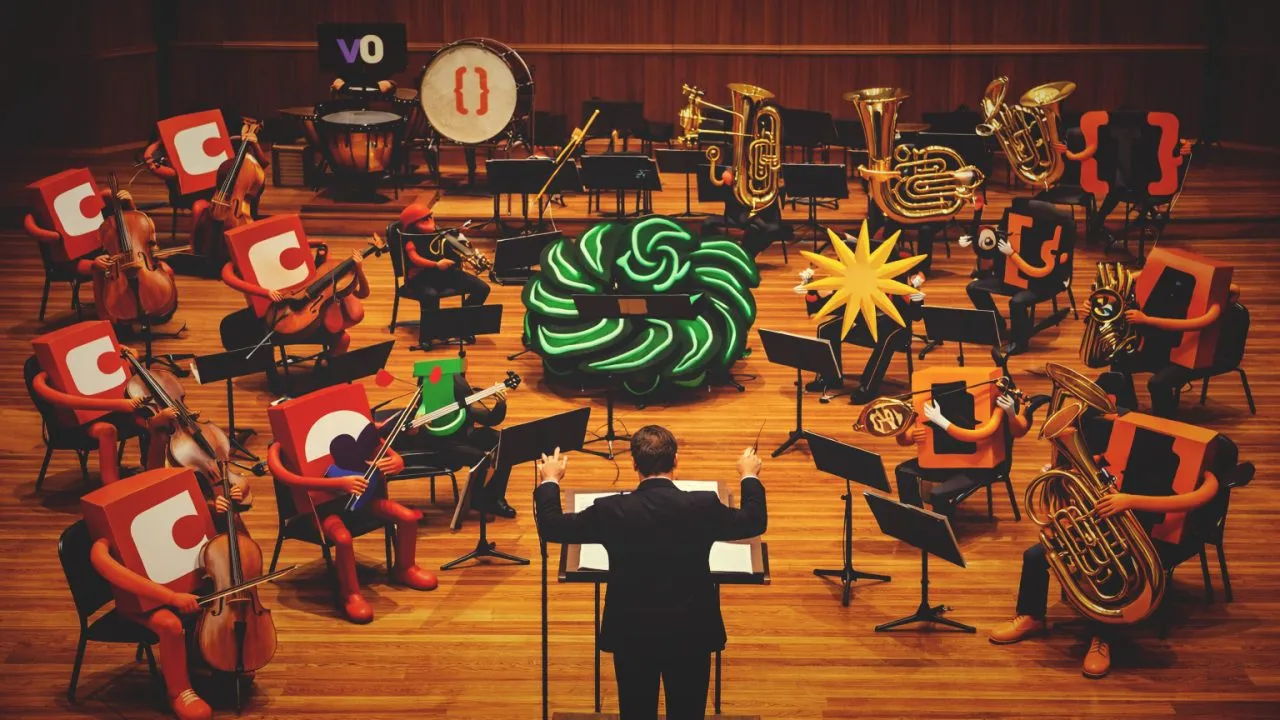
What’s becoming clearer to me is that the real value is not in mastering a single tool. It’s in being able to compose solutions across multiple tools.
In my case, I’ll continue to use Coda for structured content, consistent calculations, and more durable systems of record. I’ll continue to use AI tools for less structured work like exploration, synthesis, refinement, and one-off research. One excels at longevity and reliability, the other at speed and creativity.
Rather than anchoring myself to one tool or another, I’m choosing to focus on being a composer across an expanding toolkit.